
RELAY 9: ENGINE
Modernity — The Democratizer
From the roar of industry came the hum of electricity and the wings of flight. Grids lit cities, telegraphs stitched continents, and aviation shrank horizons. Nations sought unity through treaties and institutions, yet the unity proved fragile — tested by wars, depressions, and rival ideologies. Infrastructure became global: airports, power stations, international organizations. Modernity was both triumph and tension, a relay where humanity glimpsed planetary scale but struggled to hold it together. In this chapter, mankind learned that unity must be engineered as carefully as machines, for without balance, the scaffold of modernity fractures.
ACTIVE WEBS
ENERGY WEB
Power generation and distribution
KNOWLEDGE WEB
Thermodynamics and electrical science
EXCHANGE WEB
Energy markets and resource trade
POWER WEB
Geopolitical control of energy resources
ICUT FOUR PILLARS
INFRASTRUCTURE
Power plants, fuel extraction, electrical grids, distribution networks
CONTINUITY
Energy supply chains and technical expertise
UNIFICATION
Interconnected power systems and shared energy infrastructure
THREATS
Supply disruption, grid failure, resource depletion, climate change
HISTORICAL SIGNIFICANCE
Timeline: Approximately 1850 onwards, with continuous development through the present day.
Impact: Enabled exponential growth in human capability, powered industrial expansion, and determined geopolitical dominance. Energy infrastructure became the foundation of modern civilisation.
Legacy: Modern energy systems—from fossil fuels to renewables—are the direct descendants of early engine infrastructure. The transition to sustainable energy will define the next era of civilisation.
LA MENARA — THE REMARKABLE ENGINE
Cultural Significance Across the Five Webs
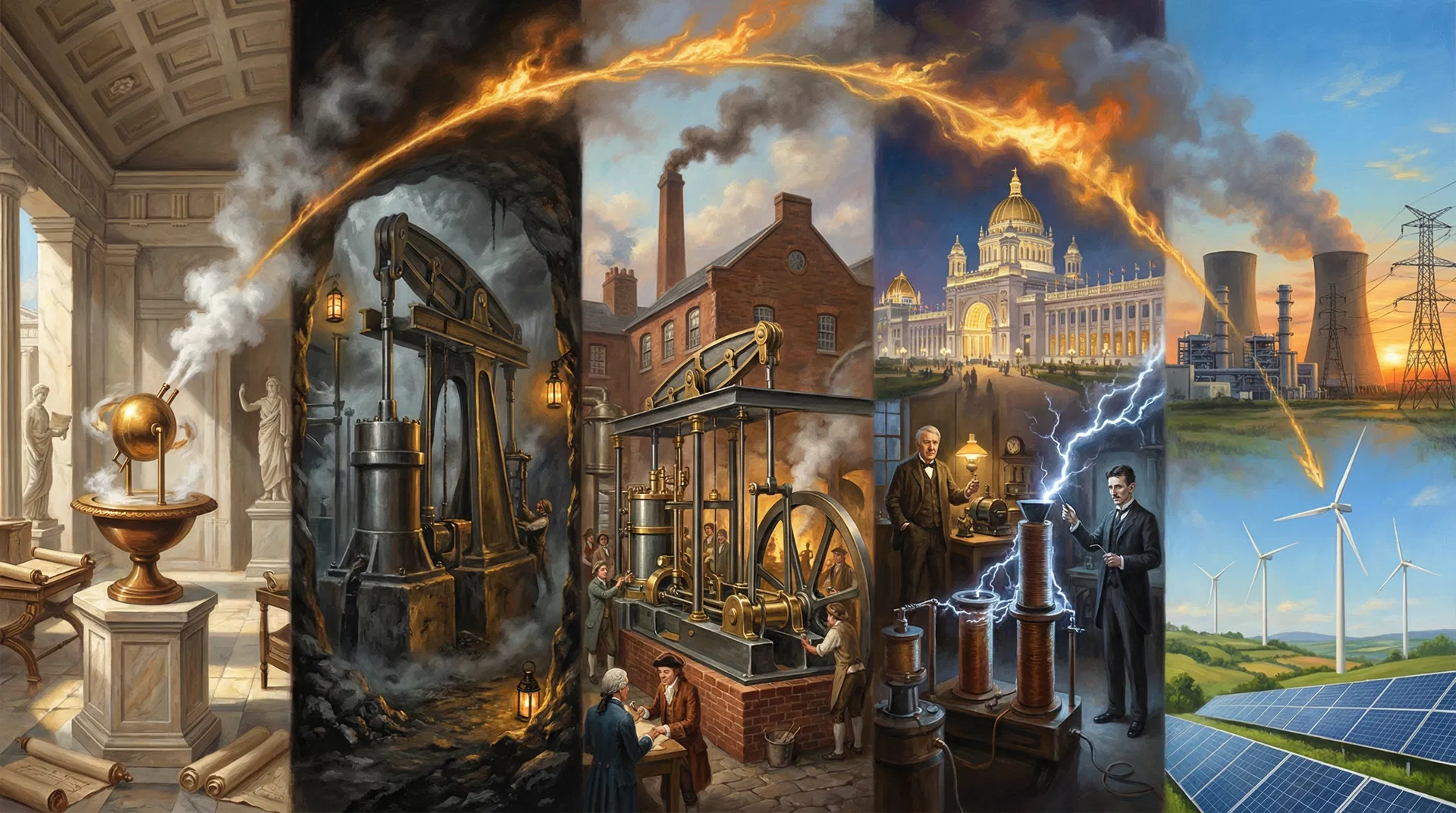
La Menara — The Cultural History of the Engine Across Civilisations
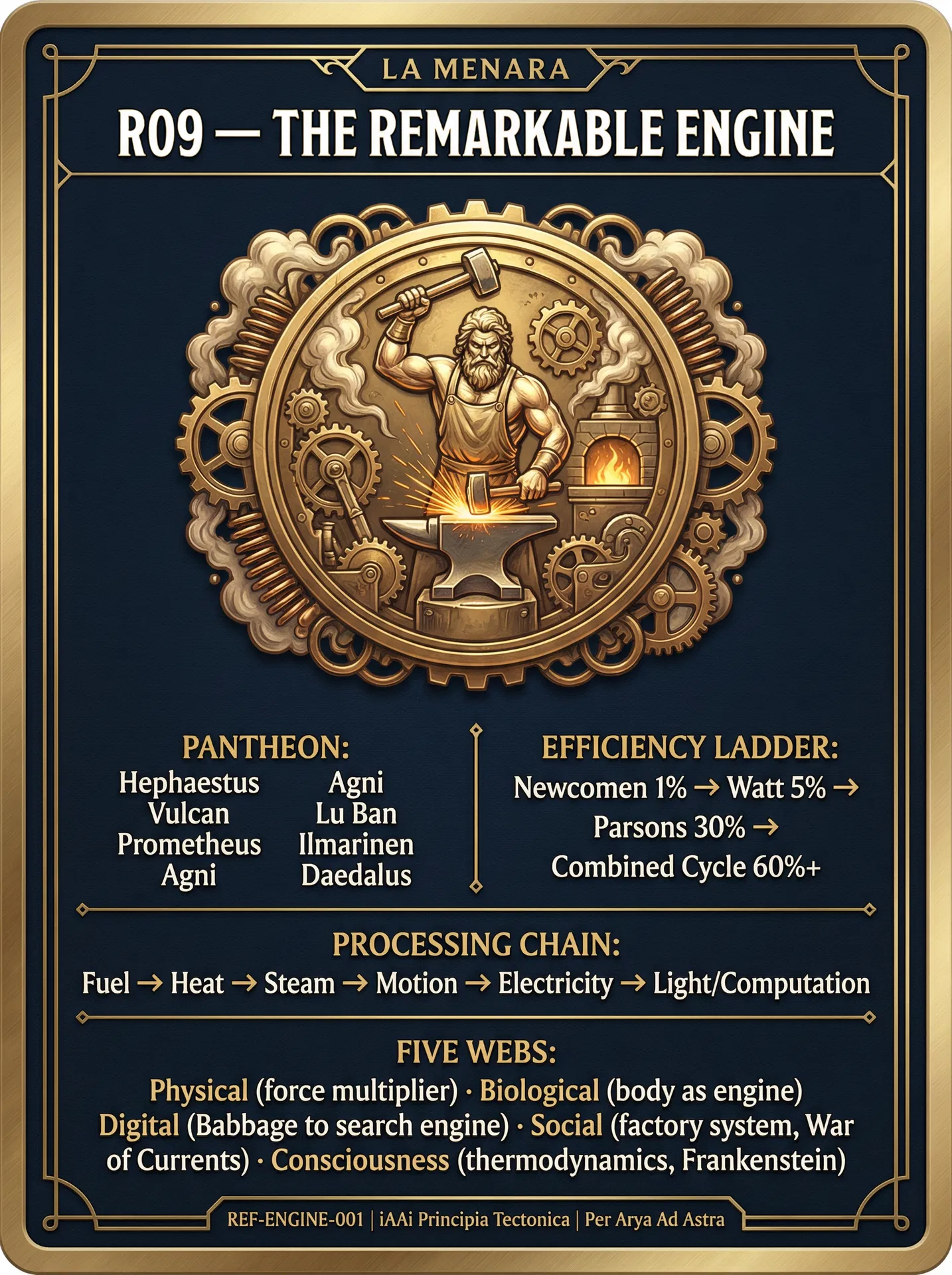
iCard R09 — Engine Cultural Significance
THE COUNTERPARTS: ENGINE
How West, East, and Outrider each approached engine infrastructure

The Counterparts — Relay 09: Engine